Południowa chwila oddech w środku dnia
Inspiracje

Jasne Paznokcie: 50 Eleganckich Inspiracji na Każdą Okazję

Jasne paznokcie to nie tylko modny wybór, ale przede wszystkim inwestycja w uniwersalność. Jeśli zastanawiasz się nad stylizacją, która sprawdzi się zarówn...

Jasne paznokcie, które przetrwają wszystko – od biurka po wesele

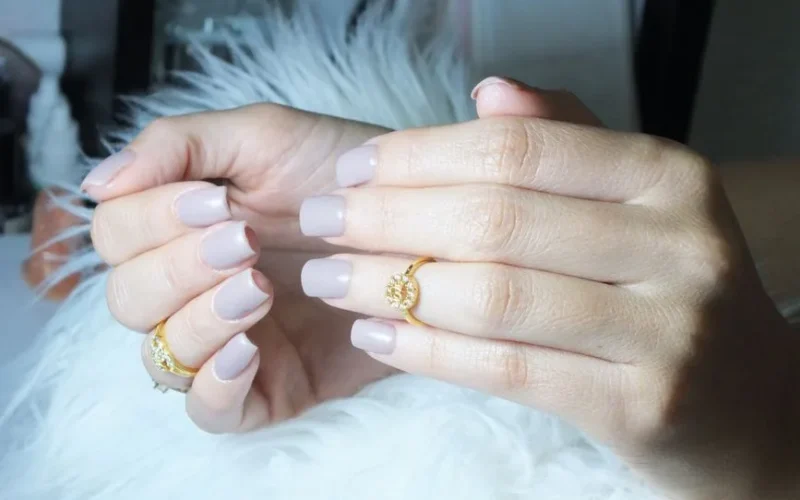
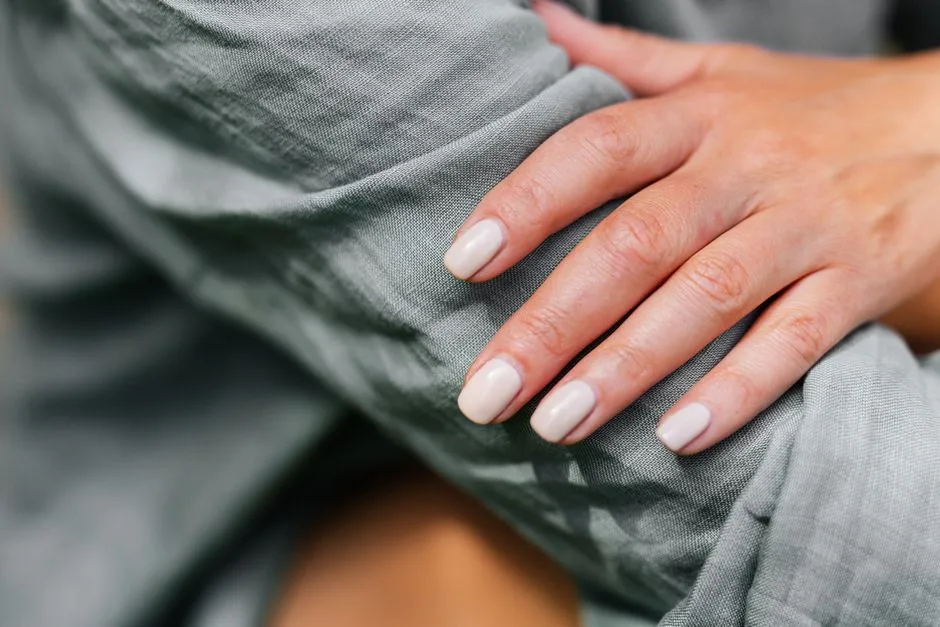
Jasne paznokcie to nie tylko modny wybór, ale przede wszystkim inwestycja w uniwersalność. Jeśli zastanawiasz się nad stylizacją, która sprawdzi się zarówno w biurze, jak i na weselu, postaw na delikatne odcienie beżu, błękitu czy jasnego różu. To nie jest nudne – wręcz przeciwnie. Nowa odsłona nude, czyli tzw. new nude, polega na dobraniu koloru idealnie dopasowanego do twojej karnacji. Dzięki temu dłonie wyglądają na zadbane, a paznokcie optycznie się wydłużają, co szczególnie docenisz przy krótkich kwadratowych kształtach. Efekt glazed donut nails, czyli lekki, perłowy połysk, możesz zrobić zarówno na paznokciach hybrydowych, jak i żelowych – wygląda elegancko i świeżo, bez zbędnego brokatu.

Jeśli szukasz czegoś bardziej wyrazistego, postaw na geometryczne wzory w pastelowych tonacjach. Cienkie linie w kolorze białym lub srebrnym na matowym, jasnym tle to hit z Instagrama, który nie przytłacza, a dodaje charakteru. Baby boomer, czyli płynne przejście od bieli do nude, wciąż jest na topie, ale możesz go odświeżyć, wybierając zamiast klasycznej bieli odcień błękitu. Taki ombre wygląda subtelnie, a jednocześnie przyciąga wzrok. Pamiętaj, że jasne paznokcie nie muszą być nudne – wystarczy zmienić końcówkę na bardziej wyrazistą lub dodać jeden akcent w postaci brokatu na jednym palcu.

Latem szczególnie dobrze sprawdzą się pastelowe paznokcie w odcieniach mięty, lawendy czy brzoskwini. To nie tylko modne, ale też praktyczne – jaśniejsze kolory mniej rzucają się w oczy przy ewentualnych odpryskach. Jeśli boisz się, że stylizacja szybko straci swój wygląd, wybierz paznokcie matowe z połyskiem tylko na jednym palcu. Taki trik optycznie odświeża całą dłoń i sprawia, że nawet po tygodniu manicure wygląda jak świeżo zrobiony. Unikaj przesadnych zdobień – prostota i elegancki wybór to klucz do stylizacji, która przetrwa wszystko.

Krótka płytka w jasnym wydaniu – jak optycznie powiększyć paznokieć

Jasne paznokcie na krótkiej płytce to wyzwanie, które często kończy się frustracją. Wiele osób boi się, że delikatne odcienie beżu czy błękitu sprawią, że paznokcie będą wyglądać jeszcze mniej efektownie. Prawda jest jednak inna – to właśnie jasny manicure, odpowiednio dobrany, potrafi zdziałać cuda optyczne. Kluczem jest unikanie jednolitej, płaskiej powłoki. Zamiast nakładać jeden odcień nude na całą płytkę, postaw na efekt ombre lub baby boomer. Delikatne przejście od przezroczystej nasady do mlecznej końcówki wydłuży palce i doda dłoniom lekkości. Możesz też wybrać french w wersji z bardzo cienkim, ledwo widocznym paskiem – to ukłon w stronę klasyki, ale bez przytłaczania krótkiej płytki.

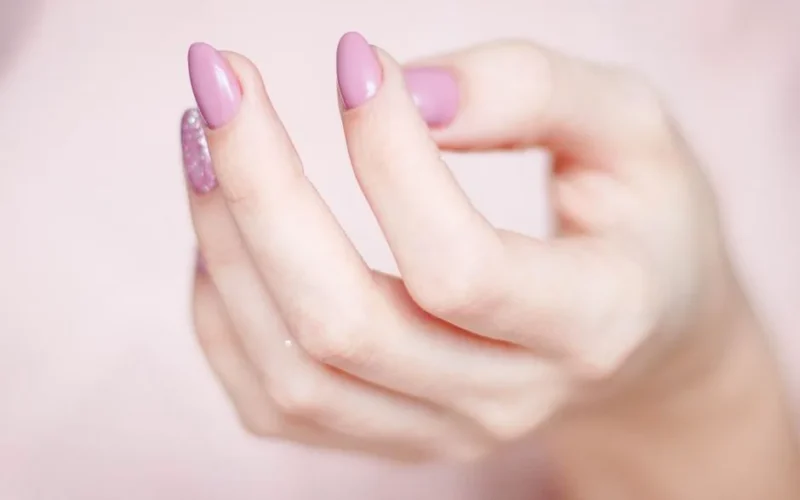
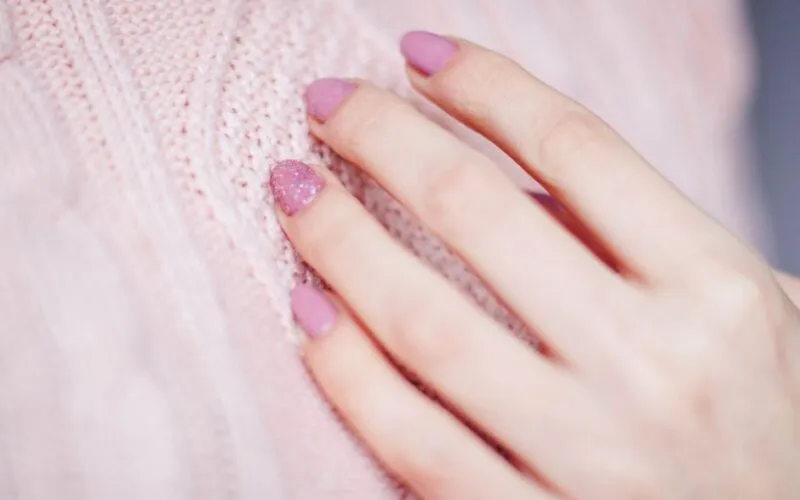
Jeśli lubisz bardziej wyraziste rozwiązania, sprawdzi się technika glazed donut nails z perłowym wykończeniem. Ten trend z Instagrama polega na nałożeniu na jasny lakier brokatowego pyłku, który odbija światło. Dzięki temu paznokcie wydają się pełniejsze, a ich powierzchnia – gładsza i bardziej wypukła. Podobny efekt osiągniesz, wybierając lakier z drobinkami, które nie tworzą grudek, a jedynie subtelny połysk. Unikaj matowych wykończeń na bardzo krótkich paznokciach – matowa powierzchnia pochłania światło i optycznie skraca płytkę. Zamiast tego postaw na satynowy lub błyszczący top coat.

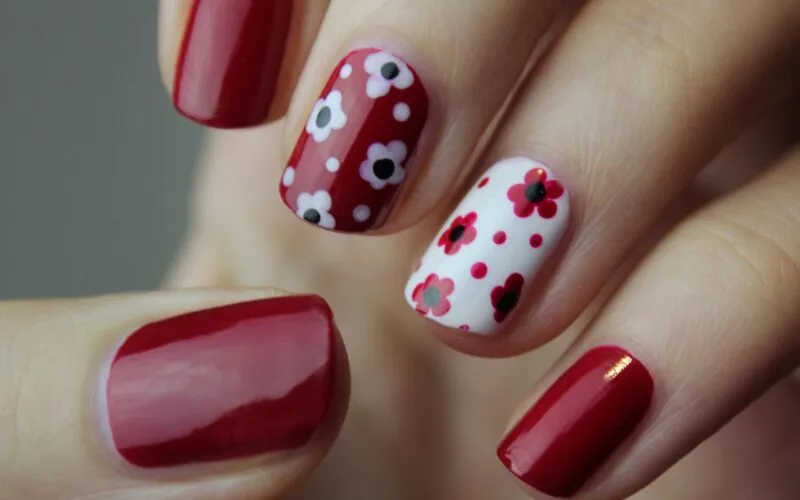
Geometryczne wzory to kolejny sposób na oszukanie oka. Cienkie, pionowe linie w odcieniu błękitu lub jasnego różu, poprowadzone od skórek do końcówki, wizualnie wydłużą paznokcie. Możesz też zrobić małe, delikatne kropeczki przy nasadzie – odwrócą uwagę od szerokości płytki. Pamiętaj, że na krótkich paznokciach lepiej sprawdzają się wzory stonowane i minimalistyczne. Zbyt duże, kontrastowe elementy mogą przytłoczyć i sprawić, że dłoń będzie wyglądać nieproporcjonalnie. Uniwersalny wybór to paznokcie żelowe w odcieniu new nude – kolor idealnie dopasowany do twojego naturalnego odcienia skóry, który stapia się z dłonią i daje efekt przedłużenia.

Najmodniejsze odcienie 2026-5 kolorów, które zastąpią nudny beż

Beże i klasyczne nude od lat rządzą na paznokciach, ale powoli ustępują miejsca świeższym, bardziej wyrazistym propozycjom. W 2026 roku na pierwszy plan wysuwają się odcienie, które wciąż są jasne i uniwersalne, ale niosą ze sobą więcej charakteru. Jeśli myślisz, że jasny manicure musi być nudny, zaskoczy cię paleta kolorów, które zdominują Instagram i salony kosmetyczne.

Zamiast standardowego beżu postaw na mleczny błękit. Ten odcień to połączenie chłodnej bieli z nutą błękitu, który na dłoniach wygląda niezwykle świeżo i elegancko. Sprawdzi się zarówno na krótkich, kwadratowych paznokciach, jak i na dłuższych, migdałowych szpilkach. Do tego świetnie komponuje się z brokatem na końcówkach lub delikatnym geometrycznym wzorem. Kolejnym hitem jest jasny róż w wersji pudrowej, czyli coś pomiędzy nude a pastelowym odcieniem. Nie ma w nim mdłości, jest za to subtelny, ale widoczny kolor, który rozświetla dłoń. To idealny wybór na lato, gdy chcesz czegoś lekkiego, a jednocześnie stylowego.

Treasure Report for H.M. Coroner:
2005 -T412: Hoard of Prehistoric Metalwork from Pencoyd
Coroner: Mr. D.M. Halpern District: Herefordshire
Assemblage date: Late Bronze Age - specifically Ewart Park Phase 950 - 750 BC
Findspot: Pencoyd, Herefordshire
Finders:
Date of discovery: 28th August 2005
Circumstances of discovery: Whilst searching with a metal detector
Summary On 28th August 2005 Mr and Mr discovered four Late Bronze Age socketed axes, whilst searching with a metal detector near to Farm, Pencoyd, Herefordshire (Ordnance Survey Grid Reference: ). The axes were discovered in a small scattered group, which had been dispersed by modern activities. The two detectorists excavated the four axes and subsequently reported their find to Mr Halpern, HM Coroner for Herefordshire, under the directions set out in the 2002 Treasure (Designation) Order of the Treasure Act 1996.
The Portable Antiquities Scheme (PAS), along with staff from Herefordshire Archaeology, investigated the findspot between 8th and 10th March 2006. During this investigation a further item of prehistoric metalwork was discovered and a geophysical survey was undertaken. The results from the excavation lead to the conclusion that the hoard had been dispersed from a relatively shallow pit, the traces of which could not be identified archaeologically. The geophysical survey revealed no underlying archaeological features.
Background to the Discovery
The excavation of the findspot by the two detectorists was undertaken on an ad hoc basis. The results of which were recorded with a series of photographs. These photos accurately show the position of some of the axes in their burial environment, however, the exact positions and depth of each axe was not recorded. Mr Coe reported that the first signal from the metal detector identified an axe which was within the plough zone (that is the area of the topsoil, which is turned over by the plough or other agricultural equipment) at a depth of approximately 4" or 10cm. Upon searching in the immediate area around the initial discovery, two more axes were discovered at a lower depth than the first, and on a slanting, downwards trajectory. Once the second and third axes had been recovered, the hole was again searched, and a further signal identified a fourth axe. This was positioned at the base of the disturbed plough zone, in a concreted lump of soil. The two detectorists dug around this area, and a chunk of soil was levered out with the axe still in place. The soil which had been removed was relatively 'clean', in that it did not contain any pottery or other artefacts. After backfilling the hole, the position of the findspot was marked by the finders so that a more detailed investigation could take place in the future. Under the 2002 Treasure (Designation) Order of the Treasure Act 1996 base-metal assemblages of prehistoric date are considered as Treasure. These assemblages are classified as "... groups (defined as one of at least two) of base-metal objects, other than coins, of prehistoric date, i.e. up to, and including, the Iron Age, from the same find. In this case, the 'same find' means closed groups of objects, including scatters of contemporary metal types, which may reasonably be interpreted as having originally been in a closed group" (DCMS, 2002: 9-10). The four axes were reported within the statutory 14 days to HM Coroner for Herefordshire, Mr Halpern, and collected by the Finds Liaison Officer for Herefordshire and Shropshire (PAS), Peter Reavill.
Re-Excavation of the Findspot and Subsequent Archaeological Investigation The Treasure Act 1996 Code of Practice it states that; "The most compelling criteria when judging 'a closed group' are, i) that there are known precedents for the close association of the given artefact types, and ii) that follow-up excavation or investigation locates the original context" (DCMS, 2002: 10). With the landowner's permission, a small 1.8m x 1.6m trench was positioned around the depression caused by the detectorist's original excavations, and excavated using hand tools. The depth of the disturbed ploughsoil was 0.3m and the depth of the sub-soil was 0.35m. At the base of the sub-soil a decayed natural was present, which was 0.1m thick. Beneath this a hard, compact, sand-rich natural was present. The sub-soil, although present as a distinct and different layer to the top soil, had been disturbed and mixed. Evidence for this came from the inclusion of occasional fragments of modern (Victorian) pottery, glass, iron nails, and small pieces of coke or coal in this layer. The detectorists' excavation had been cut through the sub-soil and had clipped the underlying, decayed, natural layer. It is possible that the concreted mass, described by the detectorists in their initial excavation, was formed by a combination of external factors affecting this layer, i.e. weather conditions / moisture content. Apart from the edges of the detectorists' pit, no other distinct archaeological feature was present. As a precaution, the whole of the excavated area, as well as the spoil from the excavation, was searched using a metal detector. During this survey another signal from the very edge of the detectorists' original excavation was identified. The area was again cleaned and no archaeological features were identified - the sub-soil was uniform in colour and consistency. A small sondage 0.2m x 0.2m was cut around the signal and excavated in 0.05m spits. At a depth of 0.25m below the sub-soil (0.55m below the ground surface) a small fragment of Late Bronze Age metal work was discovered. On the discovery of the fragment of metalwork it was decided to open a larger trench 5m x 5m around the original excavation. This was done with the help of the County Archaeologist (Dr Keith Ray) and staff from Herefordshire Archaeology. The top soil was stripped using hand tools and the surface cleaned. No cut archaeological features were observed. An area 2m x 4m in the north-west corner was excavated to the depth of the recent find of metalwork. This area was excavated by hand and carefully cleaned. Again no archaeological features were observed. A third sondage was cut through this small area over the metalwork findspot to attempt to identify any buried archaeological feature. The sondage was 2m x 0.25m and revealed no cut features. It, however, showed the depth of the natural and a profile of the soil.
Geophysical Survey Two 30m² areas were surveyed using a resistivity meter. The first grid was positioned to include the excavated trench. The second grid was surveyed to the south of the first grid. The plots showed no negative or positive features which could be interpreted as archaeological in origin. The only pattern identified was located on the excavation trench. This had been caused by the spoil (up-cast) from the excavation (pers. com. Tim Hovard).
Description of the Hoard 
The hoard consists of four socketed axes and a small fragment of a sword blade. The four axes were discovered in a scattered pattern. The extra piece of metalwork was discovered during the subsequent re-excavation of the findspot.
1) Socketed Axe: South Wales Type A complete bronze socketed axe with prominent mouth moulding and relatively straight sides which expand to form a shallow, slightly expanded blade edge. The mouth of the axe is irregular in cross-section and four trimmed casting jets are present. One edge of the mouth is slightly off set, suggesting mis-casting or mould slippage. The loop is relatively narrow and is situated in a high position (i.e. extending from the mouth moulding). The loop is lozenge-shaped in cross section. On each face of the axe three parallel longitudinal ribs descend from the lower edge of the mouth moulding. Several of the ribs are incomplete and have a rough unfinished appearance. The casting flashes on the sides of the axe have not been trimmed. The upper part of the axe around the longitudinal ribs has a blackish- green patina, whilst the blade is mid green. Areas of light-green active powdery corrosion are present on the cutting edge of the blade. There is little evidence of abrasion in the plough soil / burial environment. Dimensions: length; 105.9mm, blade width; 55.2mm, thickness at socket; 45.1mm. Weight; 324 grams
2) Socketed Axe: South Wales Variant Type A complete bronze socketed axe with prominent bulbous mouth moulding and relatively straight sides which expand to form a shallow, slightly expanded blade edge. The mouth of the axe is sub-rectangular in cross-section and only two trimmed casting jets are present. The loop is relatively small in a low position beneath the bulbous mouth. The loop is oval in cross section. On each face, two parallel longitudinal well formed ribs descend from the lower edge of the mouth moulding. The casting flashes on the sides of the axe have been hammered. There is a slight edge bevel close to the blade edge. The upper part of the axe around the longitudinal ribs and loop is a faded mid grey-green whilst the blade is mid green. Areas of light green active powdery corrosion are present on the blade edge. The blade itself has been damaged at one corner, where a small section of metal has been lost. There is no evidence of abrasion in the burial environment. Dimensions: length; 99.2mm, blade width; 47.2mm, thickness at socket; 43.1mm. Weight: 258.51 grams
3) Socketed Axe: Breiddin (Ribbed) Type A complete bronze ribbed socketed axe with prominent swollen collar and relatively straight sides which expand near to the base of the socket. The sides flare to form a slightly expanded blade edge. The mouth of the axe is sub-rectangular in cross-section and two trimmed casting jets are clearly visible. The edges of the mouth have been trimmed. The loop is relatively small and wide, in a low position, set beneath the collar in line with the horizontal moulding. The loop is oval in cross section, with a clear horizontal casting flaw running through the middle. The horizontal cast moulding is present on both faces and the edges of the axe. From this moulding, on each face, three parallel longitudinal ribs descend. The ribs are complete and taper along their length. The casting flashes on the sides of the axe have been hammered and clear striations on the blade's edge bevel suggest some preparation for use. The upper part of the axe, around the longitudinal ribs and loop, is a faded mid grey-green whilst the blade has a mid green patina. Areas of light green active powdery corrosion are present on the cutting edge of the blade. There is no evidence of abrasion in the burial environment. Dimensions: length; 113.5mm, blade width; 53.8mm, thickness at socket; 43.6mm. Weight: 390 grams
4) Socketed Axe: Meldreth variant Aylsham A complete bronze faceted socketed axe with a trumpet-shaped collar and relatively narrow sides which taper slightly before expanding to form a sub-triangular blade. The edges of the axe flare to form an expanded blade edge. The mouth of the axe is sub-circular in cross-section with two trimmed and filed casting jets. The trumpet-shaped mouth of the axe tapers and the loop is relatively small in a low position set well beneath the collar. The loop is D-shaped in cross-section. The upper body of the axe is faceted, with six faces. However, the facets are relatively low and slight. Around the upper part of the axe, on both faces (in line with the upper part of the loop), are a series of four decorative transverse grooves. Beneath this, on both faces of the axe, is a further decorative area consisting of wing ornaments. The wing ornament is formed from two semi-circular mouldings. From the base of this decoration, the sides flare to form an elegantly expanding blade with expanded blade edge. The casting flashes on the sides of the axe have been trimmed, and clear striations on the lower blade suggest preparation for use. The axe is a faded mid grey-green with some areas of dark green-black. One edge of the axe has been damaged and a long, relatively deep scratch is present. This area, along with other areas on the blade edge, has a light green active powdery corrosion product. This damage may be evidence of abrasion in the burial environment, it is certain that the damage is not ancient as a patina has not developed over it. Dimensions: length; 105.6mm, blade width; 47.1mm, thickness at socket; 30.5mm. Weight: 141.95 grams
5) Sword Blade Fragment The fragment of sword blade, probably of EwartPark type. The blade is sub-rectangular in plan and lentoid in cross-section. The blade has a rounded midrib which is separated from the edge bevels by slight hollowing. A noticeable narrowing, or tapering, in width can be observed in the edge bevels, when the top and bottom cross sections are examined. The fragment is broken at both ends and the breaks are relatively sharp and jagged, suggesting relatively little abrasion. However, it is likely that the breaks occurred in antiquity as a similar coloured patina to that on the body of the blade has developed. The blade edges are damaged and incomplete. This damage is likely to be a result of movement in the ploughsoil / burial environment. The thickness of the blade is also noticeably different; with the thicker edge being at the top and thinner toward the base, where the edge bevels taper. Both these factors suggest that the fragment came from the lower part of the blade, toward the tip. Dimensions: Length; 31.8mm, Maximum width; 34.6, Maximum thickness; 7.1mm, weight: 26.94 grams
Discussion 
Hoard Composition and Dating
The hoard, or group, of Late Bronze Age metalwork from Pencoyd contains a number of interesting pieces. The predominant axe-type within the group is the South Wales / South Wales Variant Type. This style of axe is dated to the EwartPark phase of the Late Bronze Age 950-750BC. As the name of the group suggests, these axes have their greatest distribution in South Wales, specifically in South East Wales. However, they have a much wider distribution, which extends across the South West of England. A sparse distribution of this type has also been identified in the South East and across the Channel (Savory, 1980: 49). This type of axe is present in almost all the hoards from the Marches (Welsh Border) area. However, the number of South Wales type axes decrease in the North Marches as well as in West Wales. The only other axe hoard from Herefordshire, The Madley Hoard, is composed of both South Wales Types and Ribbed axes in equal numbers (Stevenson: forthcoming). This fits within the distribution pattern described above. The ribbed 'Breiddin' axe is also dated to the EwartPark phase of the Late Bronze Age. This type of axe has a distribution predominately in North and East Wales as well as being common in the Marches Area (Musson, 1991: 133). The style of axe is named after an example found during the excavations at Breiddin Hillfort. This axe was recovered with a charred stump of a whittled willow haft which was radiocarbon dated and the results gave a date of 754 BC ±50 years (ibid: 238) The inclusion in the hoard of the Meldreth Type; variant Aylsham, is highly unusual. This style of axe has a common distribution in the East of England. The majority of axes of this style have historically been found in the East and West Ridings of Yorkshire. The distribution pattern continues to a lesser degree in South-East England (Schmidt & Burgess, 1981: 211). However, a number of Meldreth Type axes have been found in hoards associated with South-Wales Types and Ewart Park swords, for example the Stogursey Hoard, Somerset (ibid, 210). Although this style of axe is not often seen in the West, other faceted axes do occur, usually in single numbers, in hoards across south Wales and the Marches (pers. comm. Adam Gwilt) The fragment of blade from the hoard is very small and, therefore, difficult to date stylistically. Two potential interpretations are likely. First, that it is a fragment from a sword (or similar style) blade. The second is that it represents a fragment from the blade of a spearhead. A search through published catalogues of Bronze Age Metalwork (Annable and Simpson: 1964, Cheetham 1977, Ehrenburg: 1977, Evans 1881, Moore & Rowlands 1972, Needham 1990, Savory 1980) has revealed no parallels with known spearhead blades. Therefore, the sword blade interpretation is the most likely. A number of parallels can be drawn between the blade fragment and other Late Bronze Age sword blades. For example, the fragment has a lentoid cross section and rounded midrib, which is separated from the edge bevels by slight hollowing. This fragment is similar to a number of EwartPark type sword blade fragments described in The Petters report (Needham, 1990: 51). Overall, the hoard's composition fits well with its geographic position, which is transitional being on the border between two different Late Bronze Age metalworking traditions. These styles can be seen in the production of the South Wales Type axes of the Llantwit Stogursey Zone and that of the ribbed axe from the northern Marches and north east Wales. The inclusion of the single ribbed axe may indicate the marginality of this assemblage to the Northern Marches, and the inclusion of the two South Wales types may suggest that this tradition of metalworking is more influential. However, the size of this assemblage is small and other factors may affect the decisions of the people depositing the hoard.
Excavation and Geophysical Survey 
The excavation and geophysics revealed very little archaeological information about the findspot. They confirmed the original position of the hoard and also provided a further piece of Bronze Age metalwork. In addition, they confirmed that there were no buried, or visible, archaeological features present within the immediate surveyed area. The lack of buried archaeological features would suggest that the hoard had been deposited into a shallow pit or 'scoop', which probably did not penetrate the natural. There are several factors which raise questions about this theory. If the pit had penetrated the natural, then the initial excavation by the two detectorists removed any traces of this feature. In addition, sub-soiling and ploughing activities had probably already compromised the archaeology prior to the discovery of the hoard. This is shown by both the dispersed nature of the hoard, and by the lack of archaeological information present during the excavation of the sword blade fragment. Thus, there is not enough information to substantiate the precise nature of the feature. However, at the same time, the above dissenting points may also be used to argue the case that the original deposition was, indeed, ephemeral. The interpretation of the hoard being placed within a slight feature is the most convincing argument available. The subsequent dispersal of the hoard through ploughing was over a discrete area. This is shown by both the detectorists' account and the distinct lack of damage through abrasion to the majority of the axes. Both these factors suggest little movement within the burial environment. Initial analysis of the blade fragment, appears to conflict with this interpretation, as the long sides of the blade have been badly abraded. However, these blade facets are susceptible to damage due to their nature. Meanwhile, abrasion to the breaks on the blade's 'cross section' is minimal. This inconsistency in the blade's condition suggests that, although there was movement in the ploughsoil, it was not significant enough to damage the cross sections of the blade. The blade, therefore, provides further evidence that the hoard had not been moved over a large distance by agricultural activity. The geophysical survey revealed relatively little information. It confirmed that there were no built / cut archaeological features in the area investigated.
Conclusion 
This group of artefacts date to the Llanwit Stogursey / Ewart Park Phase of the Late Bronze Age c.950-750 BC. The evidence provided above indicates that the hoard was originally deposited together as a closed group which has subsequently been disturbed by modern activity. Therefore, this assemblage is eligible as Treasure under the 2002 Treasure (Designation) Order of the Treasure Act 1996 (DCMS: 2002) due to it being a base metal prehistoric find containing two or more metal objects from a closed context. The hoarding of metalwork at this time was not an uncommon phenomenon. However, this is only the second example of a Late Bronze Age Axe Hoard from Herefordshire in recent years. Also single artefacts dating from the Bronze Age are not especially common finds within the county. This group therefore constitutes an important addition to our local and regional knowledge of the Late Bronze Age period in the Herefordshire and the Marches.
Expression of Interest
Hereford Museum and Art Gallery have indicated that they would be interested in acquiring this hoard dependant on the valuation of the Treasure Valuation Committee.
Bibliography
Annable, F.K. and Simpson, D.D.A. 1964: Guide Catalogue of the Neolithic and Bronze Age Collections in Devizes Museum. Devizes: Archaeological and Natural History Society
Barber, M. 2003: Bronze and the Bronze Age. Stroud: Tempus
Bradley, R: 1998: The Passage of Arms. (2nd Edition) Oxford: Oxbow
Cheetham, F.W. 1977: Bronze Age Metalwork in Norwich Castle Museum. Norfolk Museum ServiceDCMS, 2002: Treasure Act 1996 Code of Practice. London, Department of Culture, Media and Sport.
Ehrenburg, M.R. 1977: Bronze Age Spearheads from Berkshire, Buckinghamshire, and Oxfordshire. BAR 34.
Oxford Evans, J. 1881: The Ancient Bronze Implements, Weapons and Ornaments of Great Britain and Ireland.London: Longmans, Green & Co
Gwilt, A and Lodwick, M. 2004: Late Bronze Age Hoard from Wick, Vale of Glamorgan (Case number 2004.7). Unpublished report for HM Coroner. NationalMuseum and Galleries of Wales.
Moore, C.N. and Rowlands M: 1972: Bronze Age Metalwork in Salisbury Museum. Salisbury and South Wiltshire Museum Occasional Publication
Musson, C.R. 1991: The Breiddin Hillfort, a later prehistoric settlement in the Welsh Marches, CBA Research Report, 76. York: Council for British Archaeology.
Needham, S. 1981: The Bulford-Helsbury Manufacturing Tradition. British Museum Occasional Paper 13. London.
Needham, S. 1990: The Petters Late Bronze Age Metalwork. British Museum Occasional Paper 70. London.
Parker-Pearson, M. 2005: Bronze Age Britain. (Rev. Ed.) London: Batsford / English Heritage
Reavill, P.K. forthcoming: Report on the discovery of the Pencoyd Hoard and subsequent archaeological investigations.
Savory, H.N. 1980: Guide Catalogue of the Bronze Age Collections. NationalMuseum of Wales:Cardiff
Schmidt, P.K. and Burgess, C.B. 1981: The axes of Scotland and Northern England. Prahistorische Bronzefund Abteulung IX - Band 7, Munich.
Stevenson, J. forthcoming: Report on the Madley Hoard, Herefordshire.
Acknowledgements
Thanks are extended to: · The landowner, Mr Pursey, for the opportunity to excavate the findspot and gather further information on this find. · The finders Mr Coe and Mr White · Dr Keith Ray (County Archaeologist) and Tim Hovard of Herefordshire Archaeology, for their help and support during the excavation and for the subsequent Geophysical Survey. · The staff of Herefordshire's Historic Environment Record · Judy Stevenson and Staff at Hereford Museum and Art Gallery · Jane Thompson-Webb (Birmingham Museum and Art Gallery) for advice on conservation and storage issues · Angie Bolton (PAS), Caroline Johnson (PAS), Mark Lodwick (PAS), Sally Worrell (University College London / PAS), Phil Watson (Birmingham Museum and Art Gallery) and Adam Gwilt (National Museums and Galleries of Wales) for help and advice with identification of the hoard and the protocols for excavation.
Fot.
Birmingham Museums Trust, Peter Reavill, 2010-10-27 11:58:47, licencja CC BY-SA (źródło)

Trendy 2026 roku mocno stawiają na efekty, które dodają głębi. Popularne glazed donut nails w połączeniu z jasnym odcieniem nabierają nowego wymiaru, a baby boomer w wersji z pastelową końcówką zamiast klasycznej bieli to prawdziwy game changer. Jeśli szukasz inspiracji na paznokcie hybrydowe, pomyśl o ombre, które przechodzi od mlecznej bazy do delikatnego błękitu lub jasnego różu. Taki manicure jest uniwersalny, pasuje do biura i na wieczorne wyjście, a do tego optycznie wydłuża płytkę. W 2026 roku nie chodzi o krzykliwe barwy, ale o inteligentny wybór koloru, który podkreśla naturalne piękno dłoni bez efektu przytłoczenia.

Mat czy błysk – który efekt wybrać, żeby manicure wyglądał drogo

Decydując się na jasne paznokcie, stajesz przed wyborem, który w dużej mierze decyduje o ostatecznym wyglądzie stylizacji: matowe wykończenie czy błyszczący top. Obie opie mają swoich zwolenników, ale to, która sprawi, że manicure będzie wyglądał na droższy, zależy od kilku konkretnych detali. Matowy lakier na jasnych odcieniach, szczególnie na beżach, błękitach czy delikatnym różu, natychmiast nadaje dłoniom wyrafinowany, aksamitny charakter. Taki efekt świetnie sprawdza się na krótkich paznokciach kwadratowych lub migdałkach – wygląda nowocześnie i stonowanie, jak elegancka tkanina. Mat potrafi jednak uwydatnić nierówności płytki, więc warto zadbać o idealne wypiłowanie i bazę, zwłaszcza przy paznokciach żelowych.

Z kolei połysk, a szczególnie ten osiągnięty przez gęsty, błyszczący top, dodaje jasnym kolorom głębi i soczystości. Jeśli wybierzesz pastelowe paznokcie lub modny efekt glazed donut nails, błysk sprawi, że odcień będzie wyglądał jak szkliwiony, co od razu kojarzy się z droższymi zabiegami. Błyszczące wykończenie jest też bardziej uniwersalne na co dzień – lepiej znosi kontakt z wodą i kosmetykami, a na Instagramie wygląda spektakularnie, szczególnie gdy doda się odrobinę drobnego brokatu na końcówkę. W przypadku paznokci hybrydowych połysk jest bezpieczniejszym wyborem, bo maskuje drobne niedociągnięcia.

Prawdziwie elegancki efekt często leży gdzieś pośrodku. Możesz zrobić matową bazę w odcieniu nude i dodać błyszczący, geometryczny wzór na jednym palcu. Albo postawić na french z błyszczącą końcówką i matowym resztą płytki – to subtelna gra faktur, która wygląda dużo drożej niż jednolity manicure. Trendy na lato 2026 pokazują, że łączenie tych dwóch wykończeń w ramach jednej stylizacji to strzał w dziesiątkę. Niezależnie od wyboru, pamiętaj, że najważniejsza jest jakość wykonania – nawet najprostszy jasny manicure w kolorze beżu czy błękitu będzie wyglądał luksusowo, jeśli lakier jest równo nałożony, a skórki zadbane.

Wzory, które nie krzyczą – geometryczne linie i mikrodetale na jasnym tle

Jasne paznokcie to idealne płótno dla tych, którzy lubią detale, ale nie chcą, żeby manicure krzyczał z daleka. W tym sezonie stawiam na mikrowzory i geometryczne linie, które na pierwszy rzut oka wyglądają jak delikatny akcent, a dopiero z bliska odkrywają swoją precyzję. Zamiast grubych, kontrastowych pasów, wyobraź sobie cieniutkie, niemal narysowane długopisem kreski w odcieniu beżu lub błękitu na matowej, kremowej bazie. To wygląd, który na Instagramie zbija tysiące polubień, ale w realnym życiu nie wymaga idealnego światła – po prostu jest elegancki.

Świetnym przykładem jest połączenie nowej odsłony frencha z minimalistycznym wzorem. Zamiast klasycznej, białej końcówki, postaw na cienką, geometryczną linię tuż przy skórkach lub na środku płytki. Możesz zrobić ją w odcieniu nude, który jest ledwo widoczny, albo postawić na subtelny brokat – efekt glazed donut nails z dodatkiem metalicznego akcentu wygląda jak biżuteria na dłoni. Do tego dołóż jeden paznokieć z drobnym, abstrakcyjnym kształtem, np. trójkątem czy kropką, i masz stylizację, która jest uniwersalna, ale nie nudna.

Pastelowe paznokcie w odcieniach błękitu, jasnego różu czy mięty też świetnie znoszą geometryczne zdobienia. Na kwadratowej, krótkiej płytce świetnie sprawdzi się efekt baby boomer, ale zamiast klasycznego przejścia w biel, wybierz ombre z jednym, wyrazistym kolorem na końcówce. Jeśli wolisz coś bardziej stonowanego, postaw na paznokcie matowe z pojedynczą, błyszczącą linią – to prosty trik, który optycznie wydłuża dłoń i dodaje charakteru. Pamiętaj, że w przypadku jasnych baz nawet drobny błąd w rysunku wygląda jak celowy zamysł, więc nie bój się eksperymentować.

Ombre, które robi różnicę – od mlecznego po migdałową poświatę

Delikatne przejścia kolorów to jeden z tych trendów, który nie znika, tylko ewoluuje. W tym sezonie ombre na paznokciach to już nie tylko klasyczny french z rozmytym uśmiechem. Projektanci i instagramowe artystki pokazują, że płynne gradienty świetnie sprawdzają się w wersji totalnie minimalistycznej – od mlecznej bieli po ledwo widoczną poświatę moreli, brzoskwini czy bladego błękitu. Taki manicure wygląda, jakbyś zanurzyła dłonie w porannym świetle. Efekt jest subtelny, ale robi wrażenie, bo wymaga precyzji i dobrego wyczucia proporcji.

Największą zaletą takiego rozwiązania jest uniwersalność. Jasne paznokcie z ombre pasują zarówno do biurowej koszuli, jak i letniej sukienki. Co ważne, nie musisz mieć długich szpilek – na krótkich kwadratowych paznokciach gradient od beżu do bladego różu wydłuża optycznie płytkę i nadaje dłoniom zadbany, elegancki wygląd. Jeśli lubisz błysk, możesz nałożyć cienką warstwę drobnego brokatu tylko na samą końcówkę, uzyskując efekt glazed donut nails w wersji light. To świetna alternatywa dla klasycznego frencha, który bywa zbyt kontrastowy.

W praktyce, wykonanie takiego manicure w domu nie jest trudne, ale wymaga cierpliwości. Najlepiej sprawdza się technika z gąbeczką – nakładasz na nią dwa jasne odcienie (np. mleczny i pastelowy róż) i delikatnie odbijasz na płytce. Potem wystarczy cienka warstwa topu, żeby zniwelować ewentualną fakturę. Pamiętaj, żeby wybierać lakiery o podobnej konsystencji – zbyt gęsty może zepsuć płynne przejście. W przypadku paznokci żelowych możesz bawić się pigmentami pudrowymi, które dają jeszcze bardziej mglisty, aksamitny efekt.

Jeśli szukasz czegoś bardziej wyrazistego, postaw na ombre w odcieniach błękitu i lawendy. To hit tego lata, który na Instagramie zbija tysiące polubień. Jasny manicure w chłodnej tonacji świetnie komponuje się z opalenizną i dodaje świeżości. Możesz też zrobić gradient od beżu do bladej zieleni – brzmi nietypowo, ale na dłoniach wygląda zaskakująco naturalnie i elegancko. Klucz tkwi w doborze odpowiedniego nasycenia: im bliżej nude, tym bardziej uniwersalny efekt.

Jasna hybryda bez tajemnic – co zrobić, żeby kolor nie żółkł po tygodniu

Każda z nas zna to rozczarowanie: robisz piękny, jasny manicure, a po kilku dniach zamiast świeżej bieli czy delikatnego beżu widzisz nieestetyczne, żółtawe przebarwienia. Problem dotyczy szczególnie paznokci hybrydowych i żelowych, bo im jaśniejszy odcień, tym bardziej widać każdą zmianę. Winowajcą nie jest jednak sama farba, a to, co kładziesz pod spód. Gruba warstwa bazy, która nie jest w pełni utwardzona, albo zbyt długie trzymanie lakieru w lampie powoduje reakcję chemiczną przypominającą przypalanie. Efekt? Żółty nalot, który przebija przez kolor.

Klucz tkwi w precyzji. Zanim sięgniesz po swój ulubiony jasny róż czy beż, upewnij się, że baza jest cienka i dokładnie wypolerowana. Jeśli masz tendencję do żółknięcia płytki, wypróbuj bazę neutralizującą z lekkim fioletowym pigmentem – działa jak korektor kolorystyczny, taki jak w przypadku glazed donut nails. Kolejna pułapka to zbyt gruba warstwa koloru. Jasne lakiery są zwykle mniej kryjące, więc kusi nas, żeby nałożyć ich więcej. To błąd. Lepiej zrobić trzy cienkie warstwy niż jedną grubą, bo ta ostatnia schnie nierównomiernie i żółknie od środka.

Warto też zwrócić uwagę na to, czym myjesz ręce. Agresywne detergenty, a nawet niektóre kremy z filtrami UV mogą reagować z utwardzonym lakierem. Jeśli nosisz krótkie, kwadratowe paznokcie w stylu baby boomer albo delikatne ombre, dodatkowo zabezpiecz końcówkę topem. To właśnie tam najczęściej zaczyna się ścieranie i wnikają przebarwienia. Prosta zmiana nawyków – nałożenie cienkiej bazy, dokładne utwardzenie każdej warstwy i unikanie kontaktu z chemią przez pierwsze 24 godziny – sprawi, że twój jasny manicure pozostanie nieskazitelny przez dwa tygodnie. A jeśli marzy ci się look rodem z Instagrama, postaw na pastelowe paznokcie albo new nude z lekkim brokatem na końcówce – te odcienie nie tylko są uniwersalne, ale też łatwiej utrzymać je w czystości niż klasyczną biel.

Francuski manicure od nowa – 4 wersje, które nie są tym, co znasz sprzed lat

Klasyczny french od dawna kojarzy się z białą końcówką na naturalnej płytce. Dziś ten wzór wraca w odsłonach, które nie mają wiele wspólnego z dawnym, szkolnym kanonem. Jeśli myślisz, że znasz go na wylot, zaskoczą cię cztery propozycje, które możesz zrobić nawet na krótkich paznokciach.

Pierwsza wariacja to french z efektem ombre. Zamiast ostrej granicy między kolorem a końcówką, wybierz przejście od delikatnego beżu lub nude do bieli na samym czubku. Taki zabieg optycznie wydłuża dłoń i wygląda bardzo elegancko, szczególnie na paznokciach kwadratowych. Druga opcja to pastelowe końcówki. Zamiast tradycyjnej bieli postaw na jasny róż, błękit albo miętę. To świetna inspiracja na lato, bo pasuje zarówno do codziennych stylizacji, jak i na większe wyjścia. Efekt jest subtelny, ale od razu odświeża wygląd dłoni.

Trzecia propozycja to geometryczne frenchy. Zamiast klasycznego półksiężyca na końcu, możesz zrobić cienką, prostą linię tuż przy skórce albo ukośne cięcie przez środek paznokcia. Tu sprawdzą się zarówno jasne paznokcie hybrydowe, jak i żelowe. Taki wzór jest uniwersalny i nie wymaga długich płytek. Czwarta wersja to glazed donut nails w wydaniu french. Łączysz przezroczystą bazę z perłowym brokatem i delikatną, błyszczącą końcówką. Efekt przypomina lukier i pięknie odbija światło, co na Instagramie zbiera mnóstwo polubień.

Każda z tych stylizacji ma wspólny mianownik: jasne paznokcie, które nie nudzą. Nie musisz rezygnować z wyrazistego akcentu, ale robisz go w sposób nowoczesny i dopasowany do swojej dłoni. Jeśli szukasz czegoś pomiędzy klasyką a trendem, te cztery podejścia do frencha dadzą ci wybór bez ryzyka, że za miesiąc uznasz je za passé.

Julia Mazur
Chwila z autorką

Julia Mazur

Redaktorka lifestyle i urody — pielęgnacja, styl i dobre samopoczucie w rytmie chwili dla siebie.

Poznaj Julię
Wydawca: Wydawnictwo BytePress · kontakt@bytepress.pl